Restoring water damage starts by stopping the source of the water, removing standing water, drying wet materials, cleaning and sanitizing affected areas, and repairing anything that cannot be saved. The job is not finished simply because the floor looks dry. Moisture can remain inside drywall, flooring, insulation, cabinets, and other building materials.
At VIP Restoration Services, we help property owners in Alexandria, Arlington, Fairfax, Falls Church, and surrounding areas deal with water damage from leaks, flooding, plumbing problems, appliance failures, and other water-related losses. Our restoration process includes assessing the damage, extracting water, drying the property, cleaning affected materials, addressing damaged structural components, checking for mold concerns, and performing a final inspection.
The exact work depends on where the water came from, how far it spread, how long materials stayed wet, and what parts of the property were affected.
Key Takeaways
- Water damage restoration starts with stopping the source so additional water does not continue entering the property.
- Removing standing water is only one part of the job; moisture trapped inside walls, floors, insulation, and other materials also needs to be addressed.
- Drying typically involves both water extraction and controlled dehumidification rather than relying on household fans alone.
- Materials exposed to contaminated water may require more aggressive cleaning, removal, or replacement than materials affected by a clean plumbing leak.
- Some drywall, flooring, insulation, trim, or other materials can be restored, while badly damaged or contaminated materials may need to be removed.
- Fast action matters because water can continue spreading through porous building materials even after the visible leak has stopped.
How Do You Restore Water Damage Step by Step?
The basic steps involved in restoring the property after water damage are: stop the source, inspect the affected area, remove any puddles of water if possible, dry the entire penetrated region thoroughly, clean and disinfect all items impacted, replace damaged materials completely or repair them and finally ensuring that there is proper drying in progress.
On top of that, pure restoration involves a lot more than just puddle removal. The point is to address the water you see and furthermore the dampness that you can’t.
It is as follows in general.
Stop the Source of the Water
The water source has to be controlled before any significant restoration can be introduced.
This could include shutting off a plumbing supply, stopping the buffer of an appliance, repairing an overflowing fixture, or calling for repairs to damage pipes or a leaking roof.
If the property is still taking on water, extraction and drying equipment will be battling a moving target.
It should be noted that for plumbing emergencies shutting off the right water valve as soon as possible (when doing so is safe to do) can put a stop to further damage. An electrical hazard, sewage, storm flooding or an unsafe area to go into — do not expose yourself unnecessarily and call for expert assistance.
Assess How Far the Water Has Spread
A correct evaluation actually studies past the puddle that you will visually identify.
Water is pulled downward, at the same time it moves horizontally and vertically as it travels through porous materials. When a leak makes its presence known in a room, there may also be moisture beneath the surface — in wall cavities, flooring under the visible surface area and more from within your house to between you and what is underneath it too.
At VIP Restoration Services, our water damage assessment includes identifying the water source and evaluating the severity of the loss, potential threats, and which materials may be repairable.
This assessment will dictate what requires extraction, what may be dry enough to remain in place and what has moisture damage and needs removing.
Why Hidden Moisture Matters
After water damage, one of the worst errors is thinking a surface you touch that does not feel wet is dry.
That moisture will become trapped beneath the surface of drywall, wood, insulation, carpet padding and subflooring. Mitti’s competitor resource also mentions that restoration professionals may use moisture meters or infrared imaging to find saturation not visible from the surface.
That two — because the catastrophic hidden moisture issue can continue damaging materials long after the standing water recedes.
Like, water that gets to the edge of a space can transfer below floorboards. The wall itself may look fine from its newly painted side, while the drywall or insulation behind it is still musty.
Which is why restoration decisions should be made based on moisture conditions, not appearance alone.
Remove Standing Water
Remove standing water as soon as it is safe to do so.
For larger losses, professional water extraction equipment can remove considerably more water than mops, towels, or an ordinary household vacuum.
After water extraction, we dry and dehumidify: At VIP Restoration Services, we employ water extraction devices during our restoration process.
The extraction amount is based on the lost.
There is a huge difference between an immediate leak from a small appliance such as:
- A flooded basement
- An unnoticed burst pipe
- Water spreading across several rooms
- An overflowing bathroom fixture
- A ceiling and wall leak due to roof
- Infiltration of sewage or contaminated water onto property
The larger the area that has been affected, the sooner it is essential to find out how deep and where the water or moisture migrated before you even start any repairs.
Can You Restore Water Damage Yourself?
While someone with a small amount of clean water may be able to control the situation, extensive flooding, hidden moisture, contaminated water, structural damage or electrical systems in the presence of water should cause concern.
There is an important distinction between cleaning something like a small spill and repairing a building after water infiltration has occurred through structural materials.
You can probably do minor first steps like damming a safe-to-access water source, relocating dry items away from the affected area and removing small portions of unpolluted shallow water.
Depending on the circumstances, professional help becomes important when:
- Water has penetrated walls, ceilings or floors
- Several rooms are affected
- A basement has flooded
- Water is from sewage or other dirty source
- You have no control of the distance the moisture travelled
- Help stop the circulation of moisture in materials after you remove superficial water
- You can see sagging ceilings or reduced strength of the building materials
- Mold is visible or suspected
- The occurrence of water has long been
Safety comes first. Water pooling near electrical components or a visibly compromised ceiling is not simply an average cleanup.
Dry and Dehumidify the Affected Area
The next phase following extraction is to eliminate moisture that lingers within the building components as well as the indoor air.
Now this is where water removal and water damage restoration often go hand in hand.
Extraction removes bulk water.
What remains is what drying deals with.
In some cases, professional drying can include using air movers, dehumidification equipment and continual moisture monitoring. According to VIP Restoration Services, a water restoration process includes extraction, then drying and dehumidification. On our equipment page, we also describe utilizing specialized drying apparatuses to monitor humidity and limit further moisture-induced harm.
When porous materials get wet, just opening a window or shoving one box-fan into the room may not be sufficient.
The drying plan changes depending on:
- The amount of water
- Materials involved
- Indoor humidity
- How long the area stayed wet
- Whether water entered wall or floor cavities
- Whether damaged materials need to be removed first
Some materials dry more readily than others. Others can trap moisture for much longer.
How Do You Know When Water Damage Is Actually Dry?
The area around a leak is dry due to moisture conditions within the affected materials; not because surfaces feel dry to the touch.
This distinction is important.
A wet carpet surface does not mean dry padding underneath. Even when moisture is already inside wood boards (or subfloor), it can look normal at first.
Professional restoration companies may use moisture-detection equipment during the drying process to determine whether affected materials are returning to acceptable moisture levels. Mitti also identifies moisture meters and infrared tools as methods used to locate hidden saturation during restoration.
Drying verification helps prevent repair work from being completed over materials that are still wet.
Remove Materials That Cannot Be Saved
No, everything touched by water shouldn’t just be ripped out.
Such a decision is material-dependent, related to the type of water and its saturation level, duration of exposure as well as dyeability or cleanability and ease of drying.
Certain materials might also need drying or washing.
Others may need removal.
For instance, the drywall may be too badly damaged to simply dry it out and repair so you may have to take that out along with insulation, carpet padding, trim and maybe even some flooring before the area can be restored properly.
Structural restoration is a critical part of the VIP Restoration Services process, and this might involve removing surfaces and materials that are not able to remain in place and then repairing or replacing them.
We should not make it a goal to remove as much material as we can. Cleanout should be the removal of items that cannot be removed safely or given a second life while preserving those materials that can.
Does the Type of Water Change the Restoration Process?
Yes. The source of the water can drastically change how to approach cleaning up the impact zone and what pieces can stay and what’s better off entirely discarded.
The risk for a supply-line leak is different from how it handles contamination from sewage and other sources.
That distinction affects:
- Personal protective equipment
- Cleaning methods
- Keeping porous materials in mind
- How the work area is handled
- What needs to be disinfected
- Whether certain materials need removal
This is one reason why the first inspection is important.
Similarly, the restorative guidance provided by Mitti also includes identification of water source and type of contamination in the initial assessment, before extraction, drying and sanitization process starts.
If you’re not sure about what the water contains, don’t be misled into thinking it is free simply because it’s clear.
Clean, Sanitize, and Deodorize Affected Areas
After the flooding has receded and drying out has started, affected surfaces and possessions may need to be cleansed as well.
You can be trained with cleaning, sanitizing, and deodorization from the actual document floor office furniture, personal belongings in extreme cases where we will.
The actual cleaning process is dependent on what was exposed and if the material can be recovered.
When your mains water carries unwanted contaminants or when wet conditions have affected the structure of damp porous surfaces, cleaning is extremely relevant.
Spraying a household cleaner over the top of something wet does not address where moisture is trapped behind or underneath that item. Cleaning and drying have to go hand in hand.
How Does Water Damage Lead to Mold?
Focused water damage creates the warm, damp atmosphere that allows mold issues to grow and develop when moisture stays moist.
This is the reason why restoration focuses more on regulating water and humidity instead of just repairing stains or cosmetic damage.
As part of our restoration process, VIP Restoration Services checks all water-affected surfaces for signs that mold might have formed or is likely to form; only on the basis of this check will we decide how to treat your home.
Musty smell, stains visible or not, water penetration that recurs, or wet materials that were saturated may warrant further investigation.
The simple practical point: repairing drywall or repainting a wall only before the moisture problem causing it is detected and simultaneously repaired can hide the symptom while not addressing–hence alleviating—the cause.
Repair and Reconstruct the Damaged Areas
After the affected area is validated, cleaned and dried, restoration repairs start with replacement materials.
If the loss is relatively small, repairs may involve only a few square feet of drywall; if it’s larger, repair work can take up quite a bit of room (drywall).
Possible work can include:
- Drywall replacement
- Insulation replacement
- Baseboard or trim repairs
- Flooring repairs
- Painting
- Ceiling repairs
- Cabinet or built-in repairs
- Other structural restoration
The degree varies significantly from one water loss to the next.
This is mostly extraction and drying for a leak discovered in minutes. A pipe that has been leaking for an extended period of time behind a wall can make for a much more complex restoration project.
Perform a Final Inspection
The final step should verify that restoration work is truly finished.
Our disclosed process at VIP Restoration Services ends with a final inspection to confirm that it was done correctly.
The last one is important because a restoration doesn’t just stop with the aesthetics of the room.
Moisture problems may still be addressed on the property after inspection, along with any unfinished repairs linked to the original damage.
What Should You Do Immediately After Finding Water Damage?
Your initial focus should be on safety and preventing further damage.
If you find water:
If you can turn off the source of water safely, please do.
Prevent people from entering into locations with hazardous electricity or poor structural components.
When practicable move items that are not affected by the moving water out of its way.
If you can, take pictures of the visible damage before starting any large scale cleanup.
Consult a restoration service if water is broad, polluted, concealed or damaging to building materials.
Get in touch with your insurance company when you are planning to file a claim and comply with the conditions of your policy.
VIP Restoration Services’ FAQ states that its emergency technicians can respond to extract water and set up drying equipment, and the company can assist customers with reporting a loss to their insurance carrier.
How Long Does Water Damage Restoration Take?
Since drying and repair time is dependent on how much water entered the building, what materials were soaked, and to what extent reconstruction of interior areas will be needed there is no universal restoration timeline.
Such a water loss confined to an area may take much less effort than, say, working with water that has traveled through walls and floors to several rooms or levels of a property.
Factors that may delay the process include:
- Deeply saturated materials
- Water accumulates in gaps between walls or floor
- High indoor humidity
- Contaminated water
- Materials that require removal
- Structural repairs
- Mold remediation needs
- A water source that was not found soon enough
Compared to drying and reconstruction, water extraction itself is quick. It explained that drying and dehumidification typically take longer than extracting standing water, particularly in more extensive losses.
So the timeline should be a realistic timetable from an estimate following damage, not the vague promise that nobody makes until they lay eyes upon the property.
What Can Happen If Water Damage Is Not Restored Properly?
So restoration can happen but if it’s not done completely, you can still get the moisture there and damage that is sort of underlying.
Generally unresolved water damage can be the cause of (depending on the conditions):
- Swollen or warped materials
- Damaged drywall
- Flooring problems
- Staining
- Musty odors
- Deteriorated insulation
- Mold concerns
- Continued structural damage
Signs of water damage to be on the lookout for, according to the competitor resource, include warped materials, peeling paint and soft areas — all poor signs that may hint toward moisture behind surface areas from gushing water or flooding; staining or damp floors; a musty odor; and mold or mildew.
If those signs continue after cleanup, something else may have gone wrong.
Water Damage Restoration in Alexandria, Arlington, Fairfax, and Falls Church
Clogged toilets, overflowing sinks, hemorrhaging plumbing fixtures or appliances, leaks in roofs and entire basement rooms can fill with water when the power fails.
Drying conditions are unique to each property, so you were already primed with restoration principles.
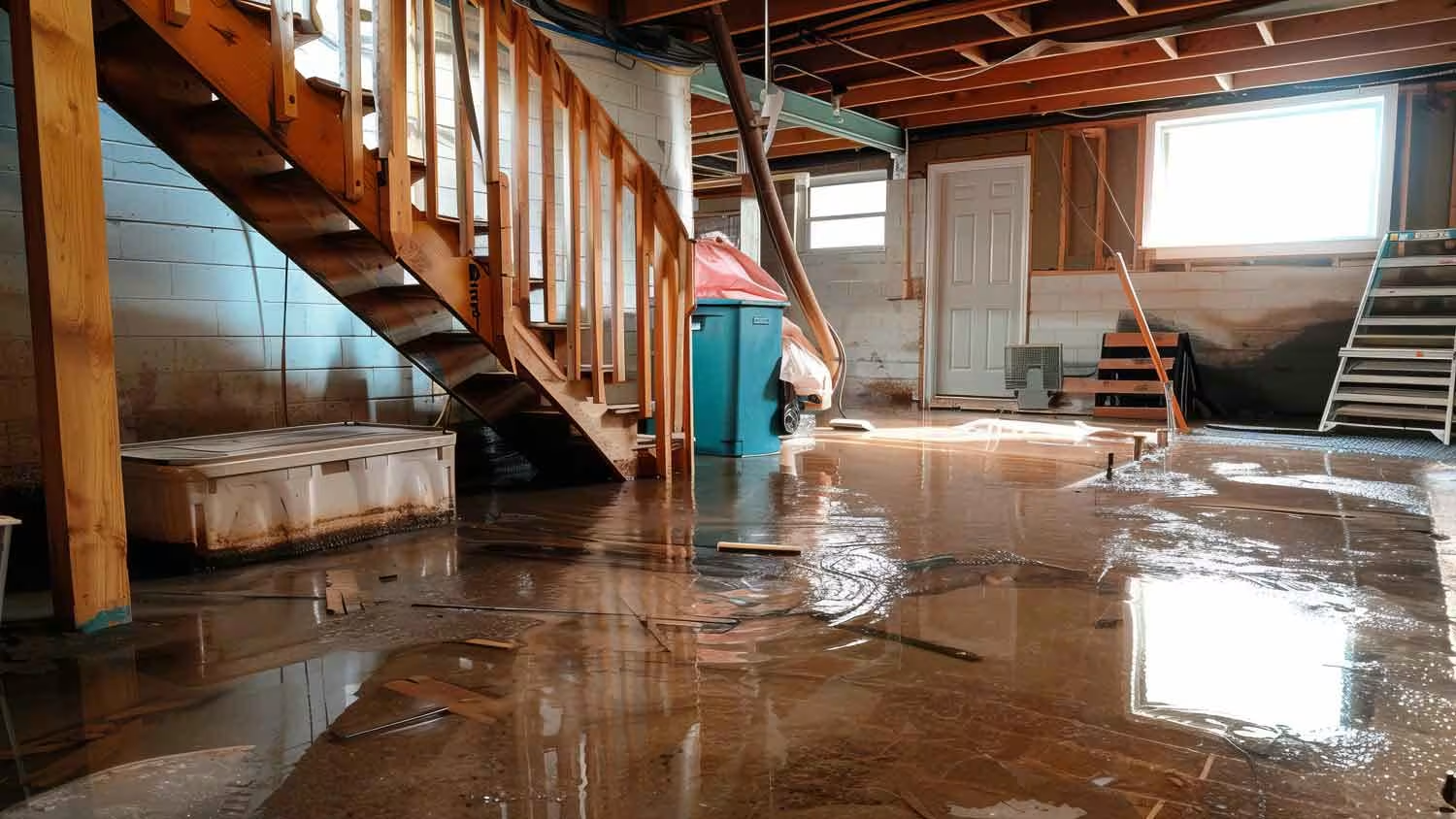
A completed basement could include drywall, insulation, flooring, trim and items stored in the affected area. Water can then flow through the flooring and into the ceiling below here. A slow plumbing leak might lie hidden in a wall before it ever causes visible discoloration.
This is exactly why we begin with an assessment instead of just assuming that a water loss should be treated the same way.
VIP Restoration Services provides water damage restoration services in areas that include Alexandria, Arlington, Fairfax, and Falls Church, and our website lists water damage, mold remediation, sewage cleanup, fire damage restoration, and related property-loss services.
Need Help Restoring Water Damage?
If water has reached your walls, flooring, ceilings, basement, or other building materials, removing the visible water may only solve part of the problem.
At VIP Restoration Services, we assess the affected area, identify the source, extract water, dry and dehumidify affected materials, clean and sanitize where needed, address damaged materials, evaluate mold concerns, and complete a final inspection as part of our restoration process.
We serve property owners in Alexandria, Arlington, Fairfax, Falls Church, and surrounding areas.
If you are dealing with active water damage, contact VIP Restoration Services to request an assessment and determine what needs to be dried, cleaned, removed, or repaired.
FAQs About Restoring Water Damage
Q: What is the first step in water damage restoration?
A: The first step is to stop or control the source of the water when it is safe to do so. Once additional water intrusion has been stopped, the affected area can be assessed and standing water can be extracted.
Q: Can water-damaged drywall be saved?
A: Sometimes, but it depends on how wet the drywall became, how long it remained wet, the condition of the material, and the type of water involved. Severely damaged, contaminated, or deteriorated drywall may need removal.
Q: Is removing standing water enough?
A: No. Removing standing water addresses visible water, but moisture may remain inside flooring, walls, insulation, wood, and other materials. Proper drying and dehumidification are separate parts of the restoration process.
Q: Can fans dry water damage?
A: Fans may help air movement in some minor situations, but significant water damage often requires a more controlled drying process. Professional restoration commonly uses extraction equipment, air movement, dehumidification, and moisture monitoring together.
Q: Do you always have to remove flooring after water damage?
A: No. Whether flooring can stay depends on the flooring material, water source, level of saturation, condition of the material underneath, and whether it can be dried effectively. Some flooring can be restored, while other situations require partial or complete removal.
Q: How do you prevent mold after water damage?
A: The main objective is to remove excess water and thoroughly dry moisture-affected materials. Areas that remain wet should be evaluated, and materials that cannot be adequately cleaned or dried may need to be removed. VIP Restoration Services includes mold assessment and remediation considerations in its water damage restoration process.
Q: Should I call my insurance company after water damage?
A: If you plan to make a claim, contact your insurer and review your policy’s requirements. Coverage depends on the policy and cause of loss. VIP Restoration Services states that we can assist customers with reporting losses and navigating the restoration side of the insurance process.

