If you often wonder how long does water damage restoration take when you face a flooded basement, here’s the short answer: it typically takes between three to five days for the drying phase alone. From there it takes VIP Restoration another few days or weeks to fix every issue.
Key Takeaways
- Extraction Speed: Crews remove surface liquids within four hours of their arrival.
- Drying Duration: Structural components like subfloors require up to one hundred twenty hours.
- Mold Window: Fungal growth starts within two days if dampness remains.
- Arlington Context: Virginia humidity often necessitates industrial dehumidification tools for success.
How Does Structural Drying Influence the Restoration Timeline?
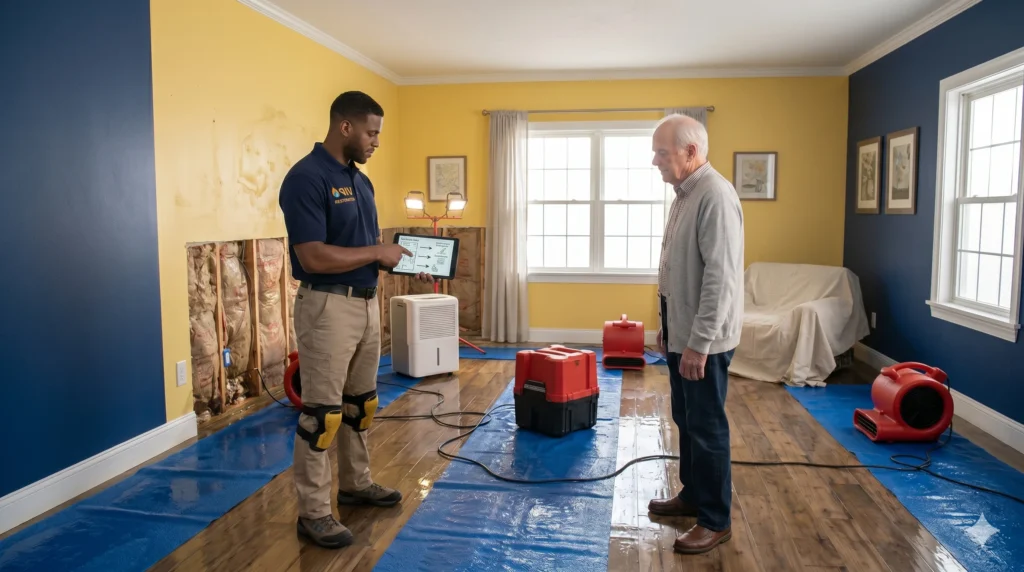
Air movers and dehumidifiers act as the main tools in Arlington. Devices circulate the air at high speeds to evaporate moisture. Residents will hear the loud hum of machinery for several days. Technicians check progress every morning to reach the dry standard quickly. People often ask their lead technician how long does water damage restoration take while equipment runs.
Proper moisture control stops the air from reaching total saturation levels. This step prevents permanent wood warping or structural failure in the house. Our staff ensures the power remains on throughout the entire cycle. This phase represents the most time-consuming portion of the whole task. Experts adjust fan placement based on real-time data from the sensors.
The Strategic Framework for Recovery
Phase I: Saturation Assessment
- Use infrared thermal imaging to map moisture migration through wall cavities.
- Find the leak source to stabilize the environment before work starts.
Phase II: Rapid Extraction and Sanitization
- Employ truck-mounted units to eliminate most standing water on site.
- Apply antimicrobial chemicals to stop bacteria in gray or black water.
Phase III: Controlled Evaporation
- Set axial air movers to create a vortex across wet surfaces.
- Observe the dew point to calibrate dehumidifier exhaust settings.
Why Is the Initial Inspection and Water Extraction So Critical?
Early efforts dictate the total expense and length of home recovery. Specialists arrive at the scene to assess liquid saturation levels immediately. They utilize moisture meters to find damp spots hidden behind drywall. This evaluation period typically concludes in less than sixty minutes.
Technicians start the extraction process with high-powered vacuum systems. Machines pull moisture from carpets and floorboards quite effectively. Rapid responses prevent fluid from moving into the deeper wooden subflooring. You see the professional difference during these first few critical hours.
Our crew works hard to clear every puddle before fans arrive. We also document every detail for your insurance claim representative. This paperwork ensures a smoother path toward full financial reimbursement later.
How Do Water Categories and Sewage Hazards Impact Safety?
Contamination levels dictate the specific cleaning protocols for your property. Category one describes clean supply lines that burst suddenly. Category two involves gray liquid that contains some biological matter. Category three consists of sewage or black water with dangerous pathogens.
Filthy environments require the removal of all porous household items. This practice ensures the health of everyone who lives in the building.
- Category 1 (Clean): This water comes from a sanitary pipe or heater.
- Category 2 (Gray): This fluid contains chemicals from a dishwasher or sink.
- Category 3 (Black): Grossly unsanitary liquid flows from sewer backups or floods.
Why Do Porous Materials Require Different Drying Techniques?
Various materials react differently to moisture based on their internal density. Hardwood floors require special mats to pull dampness from the grain. Drywall loses its strength if it stays wet for forty-eight hours. Concrete slabs retain moisture for months due to extreme thickness.
- Hardwood Flooring: These planks warp or cup if they dry too slowly.
- Standard Drywall: Professionals make flood cuts above the line to vent cavities.
- Concrete Slabs: These surfaces act like sponges and need desiccant tools.
- Baseboard Removal: This step allows air to reach the bottom wooden plates.
Professional Restoration vs. DIY Methods
| Feature | DIY Methods | VIP Restoration Services |
| Power | Small shop vacuums | Industrial truck-mounted suction systems |
| Monitoring | Basic touch tests | Digital mapping and thermal cameras |
| Safety | High risk of hidden growth | Full mitigation with chemical sealants |
| Claims | No documentation | Detailed logs for insurance adjusters |
Does the Presence of Mold Change the Recovery Speed?
Fungus discovery adds many days to the total project schedule. Growth starts within two days of the initial flood event. Delays in professional help cause the timeline to expand significantly. Workers must build containment barriers to stop the spread of spores.
Homeowners should ask the crew how long does water damage restoration take if mold appears. Remediation requires HEPA filters to scrub the air of microscopic particles. This extra labor ensures your family stays healthy throughout the cleanup. Meticulous cleaning procedures and material removal require many additional work hours.
What Are the Specific Steps in the Restoration Workflow?
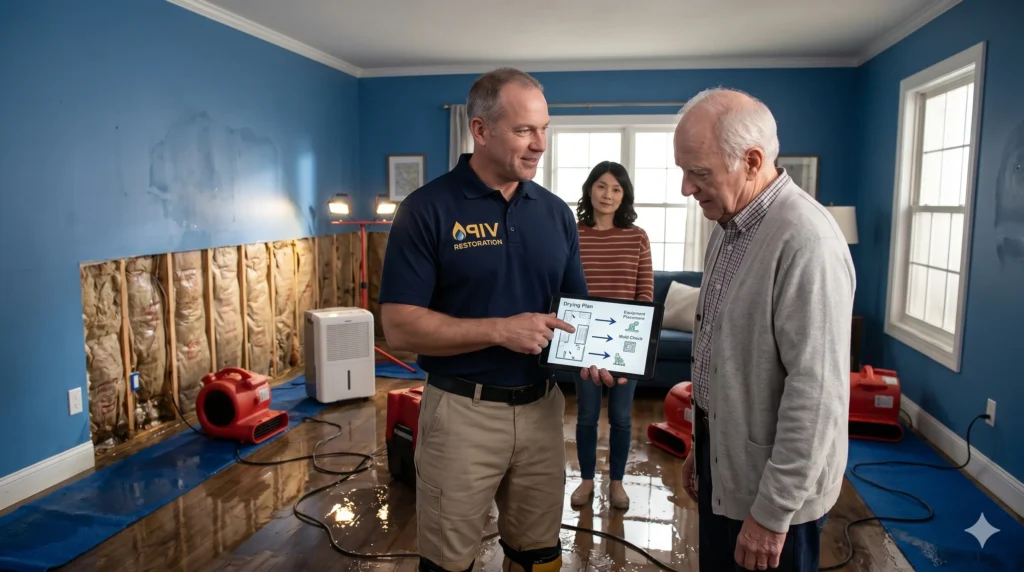
Our staff follow a certified workflow to protect the structural integrity. The team removes standing liquid and applies treatments right away. Members install specialized fans throughout every affected room or zone. Employees record data daily to track the progress of the dry cycle.
- Site Safety Survey: Check electrical wires and stability upon arrival at the home.
- Water Extraction: Eliminate bulk liquid to save furniture and personal belongings.
- Antimicrobial Application: Treat every surface to stop germs from growing during the process.
- Material Replacement: The final stage involves repairs and installing new drywall or floors.
Expert Perspective
Pro Tip: People often think a wall is dry if it feels okay. Reality suggests that moisture hides deep inside the insulation or studs. We use probes to verify the material reached a dry standard. Technicians take baseline measurements from a healthy part of your house.
If you ignore this data, you invite wood rot and decay.
Get Fast and Effective Water Damage Restoration
Speed remains the most vital factor in saving any residential structure. Hire VIP Restoration Services to access advanced technology and professional drying protocols. These methods prevent mold and give you peace of mind again. Call VIP Restoration Services to 240-370-6634 to ask how long does water damage restoration take for your home.
Frequently Asked Questions
Q: How quickly should I call for help?
A: Contact a professional within sixty minutes of finding a major leak. Immediate action prevents permanent damage and stops toxic growth in your walls.
Q: Will my insurance cover the costs?
A: Policies usually cover sudden damage from a pipe or appliance break. You must document the destruction and contact your provider to start a claim.
Q: Can I stay in my home during drying?
A: You can stay if the damage affects only one small room. Industrial fans create significant noise and heat which might make the environment uncomfortable.
Q: What if the water is from a sewer?
A: Sewer backups require expert cleaning to remove dangerous germs and filth. Avoid all contact with the water and evacuate until technicians sanitize the space.
Q: Is mold always a concern?
A: Fungus becomes a threat if your house stays wet for two days. Professional equipment eliminates the moisture that these spores need to colonize building materials.

