How to remediate water damage starts with one simple rule: stop the water, remove the moisture, and dry the structure before the problem spreads. In Alexandria homes, water damage can come from burst pipes, appliance leaks, sewage backups, roof leaks, or storm flooding. VIP Restoration Services helps property owners handle the cleanup quickly, safely, and correctly so the damage does not turn into mold, rot, or expensive structural repairs.
Let’s cut to the chase. Water damage is not just “a wet floor.” Water moves behind walls, under flooring, into insulation, and around baseboards. The longer it sits, the more materials it affects. A professional restoration team can inspect the damage, remove standing water, dry hidden moisture, clean affected areas, and help restore the property the right way.
Key Takeaways
- Water damage remediation should begin as soon as the water source is controlled.
- Hidden moisture can stay inside walls, floors, cabinets, and crawl spaces.
- DIY cleanup may work for tiny clean-water spills, but larger damage needs professional equipment.
- Mold prevention depends on fast drying, moisture checks, and proper ventilation.
- Professional documentation can help support your insurance claim.
- Calling a trained restoration company protects your home from long-term damage.
Understanding What Water Damage Remediation Encompasses
The water damage remediation is the process of stopping and preventing the damage, extracting or removing standing water, drying out physical structures and contents, cleaning flood-affected areas (removing remnants of muck) or dust particles, and preparing the space for repair work. It is not the same as mopping the floor or pointing a fan on it.
What matters here: the water you see is just the tip of the iceberg. Moisture may still be contained behind drywall or underneath wood flooring, and a room can appear dry. The moisture hidden by insulation can weaken materials and provide the conditions for mold.
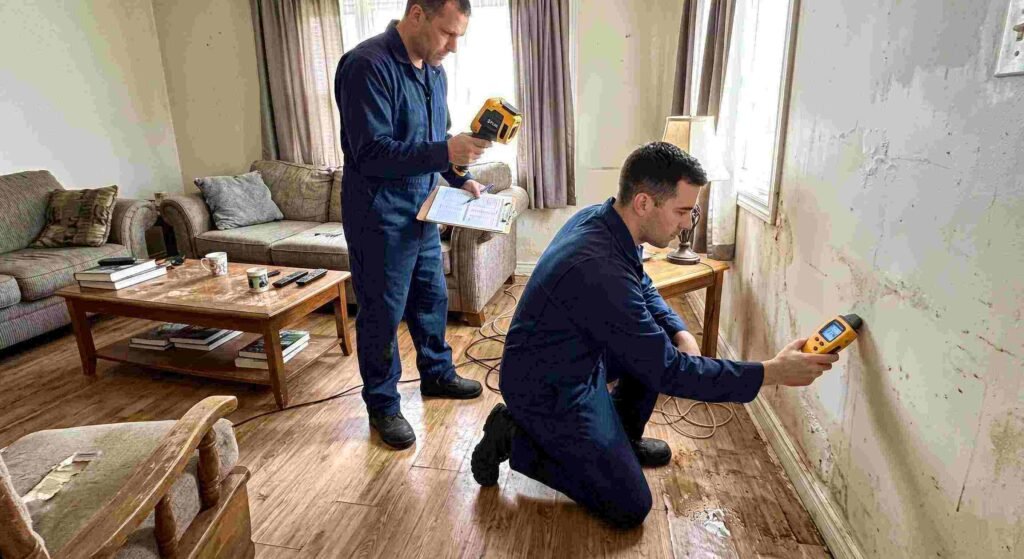
Professional remediation does not stop at the visible sections. They make use of moisture meters, thermal imaging, extraction equipment, air movers as well as dehumidifiers to appropriately dry the structure.
Step 1: Stop The Source Of The Water First
Cleanup cannot commence until the source of water is halted. Stopping further incidents could mean anything from turning off the main water valve, to fixing a broken pipe and stopping appliances, to stopping the flow of water entering through the damaged area.
If the water is coming from sewage backup or floodwater, DO NOT walk in it without proper protective equipment. Bacteria, chemicals and other hazards can be transferred through polluted water. If it is so, then better call professionals immediately.
If it is safe for you to do so with clean-water leaks, move small valuables away from the wet area. But don’t start tearing up the floors or cutting open walls, alone. That can exacerbate the damage and may impact how a clean-up will go.
Step 2: Check Out the Entire Damage
That does not seem right and the next step is a general inspection. This is where the majority of DIY cleanups go wrong. Humans dry the surface and think the job is done only to find mold smell days after.
A proper inspection checks:
- Where the water started
- How far it traveled
- What materials are wet
- Whether or not the water is clean
- Whether it affects drywall, insulation, flooring or cabinets
- Whether mold is already present
- What Equipment Is Required for Drying
VIP Restoration Services will assess the damage done and but together an effective drying plan based on the class and category of loss. Why this is important: Because a leak from the ceiling requires a different response than when there is flooding with dirty sewage on your basement floor.
Step 3: Remove Standing Water
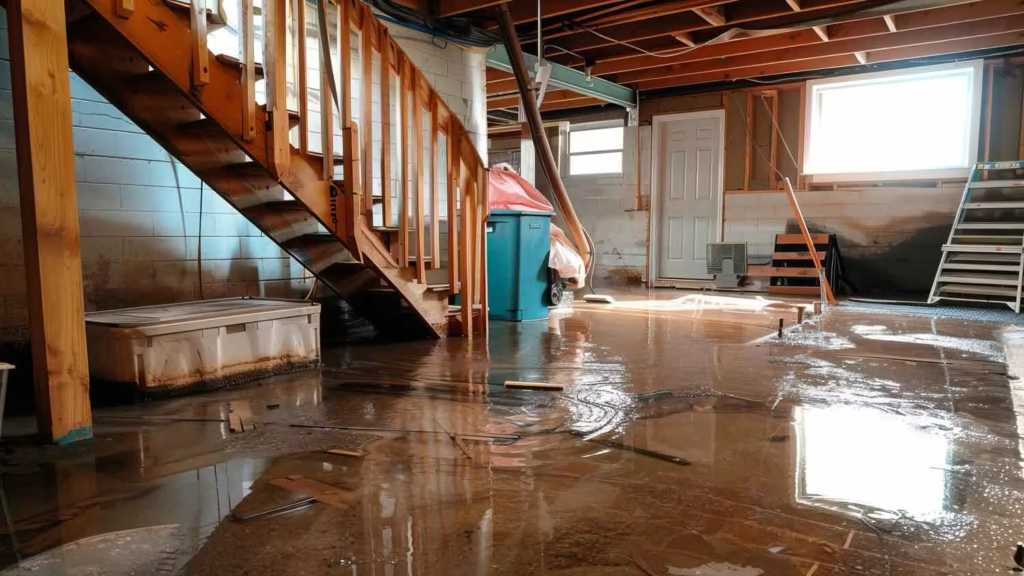
Remove standing water as soon as possible after inspection. In most cases, commercial-grade pumps and vacuums are used for water extraction. This is necessary because the less water you leave, the faster your drying process can start.
A residential wet/dry vacuum might absorb a minor clean-water accident, however it is not up to the challenge of soaked carpet, basement flooding, or water that has overflowed multiple rooms. A professional extraction extractor will remove more water and help mitigate the risk of secondary damage.
What You Should Do: If the water is widespread, hits walls, gets into carpet padding, or enters lower levels of the home donk use towels and fans — call a restoration company.
Step 4: Use Niche, When Necessary
All wet material is not recoverable. Quick treatment of some materials will help with the drying process. Others hold moisture and contamination.
As an example, hardwood floors might be recoverable if drying is begun swiftly. You may be fine with tile, but regardless of the finish above, the subfloor is going to be wet. It may mean cutting out sections of drywall that have absorbed water and are at risk of contamination. Carpet padding acts like a sponge, so it has a shorter life and often needs to be replaced.
The most worrying I think, are the porous materials. When water that is contaminated contacts carpeting, insulation, ceiling tiles, drywall or other porous materials then removal may be the safest choice. This is especially true with sewage cleanup because it’s not simply moisture that is the issue. It is sanitation.
Step 5: Dry and Dehumidify the Structure
The real work of remediation occurs during the drying phase. DIYs fail miserably here as well. A box fan can dry the surface but not suck moisture out of building materials deeply.
Air movers and dehumidifiers are used in professional drying to control airflow and humidity. The objective is to extract moisture from the air and affected materials until dryness reaches safe levels within the structure.
Moisture readings tell technicians how it is going. This is useful to ensure that the property is indeed dry, as opposed to being merely surface dry.
This is the part most homeowners overlook when they ask how to remediate water damage. Drying requires the correct equipment, in the correct areas and observations every day. Lack of drying leaves moisture. While uncontrolled airflow is important, too much of it in the wrong situation can carry contaminants or spores of mold.
Step 6: Clean, Sanitize And The Control Of Odors
Once water has been removed and affected areas dried, they should be cleaned. How you clean it up will depend on the source of the water.
Repairing supply line leaks are distinct from appliance leaks, or black water associated with sewage. Water that has been polluted calls for much harsher personal protective measures and disposal strategies, as well as effective sanitation.
Odor control can also become necessary. Toothpaste or must (Washing Cabinet) — a melancholic undertone, no problem; strength (the moisture and microbial growth began.) Air fresheners never clean up the smell. You have to find the source and treat it.
When more than one issue is present, it makes sense to hire VIP Restoration Services for water removal sewage removal mold remediation and restoration of water damage — all handled under a single roof.
Step 7: Stop That Mold in Its Tracks
Fast remediation also matters because of mold prevention. Mold can start to grow when moisture sits on building materials. In humid weather, that is why Alexandria homes are particularly susceptible — damp indoor spaces dry more slowly due to lack of proper equipment.
Not very easy: water management is mold management.
To reduce mold risk:
- The earlier you can start drying the better.
- Rapidly remove wet porous materials on a need to basis
- Keep humidity under control
- Inspect concealed spaces, not only accessible surfaces
Also do not paint over the stains caused by moisture if it has not been attended yet!
If mold growth is present or odors persist, you should be calling for it (mold remediation)
Do not scrub large areas of existing mold without sealing it off first. This will release spores into other rooms. With training, crew can isolate the area, safely remove affected materials, and clean thoroughly.
The Value of Engaging Professional Water Damage Remediation Services
Various homeowners attempt to repair water damage on their own to save a few bucks. Understandable for a small spillage and hard floor. However, when water approaches walls, carpeted areas, cabinets or several spaces the hazard is very different.
Getting professional help is worth it as the technicians can:
- Find hidden moisture
- Use commercial drying equipment
- Prevent further material damage
- Handle contaminated water safely
- Document damage for insurance
- Reduce mold risk
- Restore the property more efficiently
The first mistake is assuming that “looks dry” means “is dry.” Water does not care what the surface is. It follows gravity, air gaps, seams and some porous materials.
The Most Common Signs That You Still Have Water Damage
Keep an eye out for warning signs after cleanup. Just means moisture is trapped somewhere.
Look for:
- Musty odors
- Stained walls or ceilings
- Peeling paint
- Warped floors
- Soft drywall
- Buckling baseboards
- Unusual humidity indoors
- Mold spots
- Repeated moistness around the same location
If any of these come up, book an inspection. Knowing the problem in early days is cheaper than removing mold growth or work on structural damage after a few months.
If you have experienced damage resulting from a water leak or broken pipe, here is how to safely remediate the water.
While you are reading this, if you have a leak right now, here is the down and dirty safe response:
- Turn off the source of water if this is an option for you.
- Switch off supplies in areas affected if safe to do so.
- Distance commodities from the water-cooled space.
- Avoid contact with sewage or floodwater.
- Take photos for documentation.
- Call a professional restoration company.
- Avoid putting in new flooring, painting, or drywall until that part is totally dry.
Basically this is the practical answer to how they do it without making it worse. So as soon as possible, get the guesswork out of the way and ensure that the structure is dry before any repairs are made.
Conclusion
Water damage is quick, but your response can save your home from mold, odors, damaged flooring, structural drywall issues and all kinds of long-lasting repairs. Stopping the source, extracting water, drying out all hidden moisture, disinfecting affected areas and confirming that the property is safe before rebuilding.
If you need help in Alexandria, VIP Restoration Services is ready to handle the process with proven drying methods, clear communication, and professional restoration support. Call VIP Restoration Services at (240) 370-6634 for water damage restoration, water removal, sewage cleanup, mold remediation, or fire damage restoration services.
Frequently Asked Questions
Q: How fast should water damage be remediated?
A: Water damage should be addressed as soon as possible. Fast cleanup helps reduce mold risk, material damage, and repair costs.
Q: Can I remediate water damage myself?
A: You can clean a very small clean-water spill yourself. If water reaches walls, carpet, flooring, cabinets, or multiple rooms, professional help is safer.
Q: How do professionals dry water damage?
A: Professionals use extraction tools, air movers, dehumidifiers, moisture meters, and drying plans to remove visible and hidden moisture.
Q: Will water damage always cause mold?
A: Not always. Mold is more likely when damp materials are not dried quickly and completely.
Q: How do I know if my walls are dry after water damage?
A: The best way is to use professional moisture detection tools. Walls can feel dry outside while still holding moisture inside.

