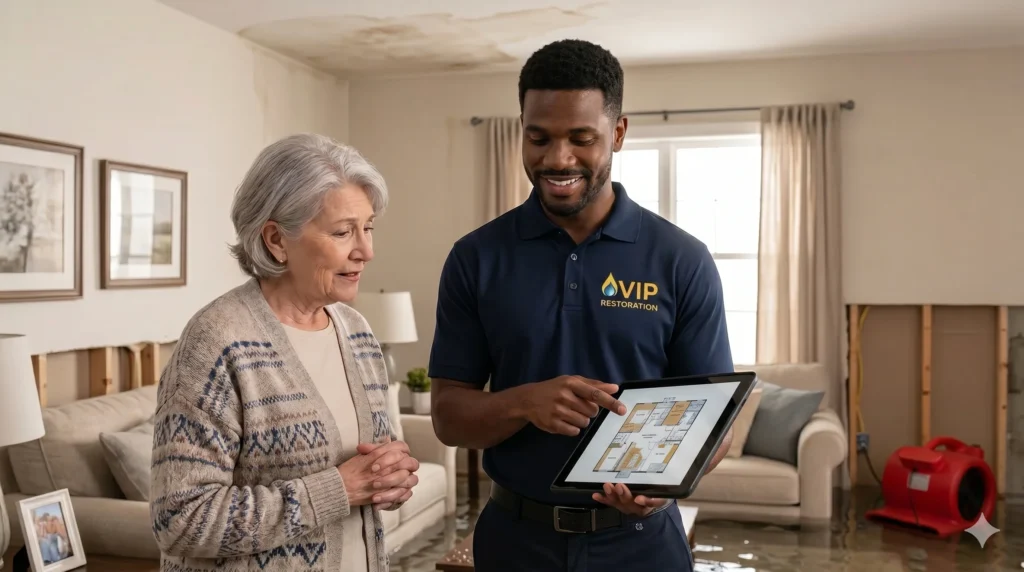
What is water damage remediation? It is the process of stopping water damage, removing excess moisture, drying affected materials, cleaning contaminated areas, and helping your property become safe again. For homeowners and business owners in Falls Church, this matters because water does not stay in one spot. It spreads behind walls, under flooring, into insulation, and around structural materials faster than many people expect.
Here’s what matters: water damage is not just about what you can see. A wet carpet or puddle near the wall may be only the surface problem. The bigger concern is trapped moisture. That hidden moisture can weaken materials, create musty odors, and lead to mold if it is not handled correctly. VIP Restoration Services helps property owners deal with water damage using proper drying methods, moisture checks, cleanup, and restoration support instead of guesswork.
Key Takeaways
- Water damage remediation focuses on stopping damage before it gets worse.
- Fast action helps reduce the risk of mold, odors, and structural issues.
- Professional drying equipment is much more effective than household fans.
- Hidden moisture behind walls and under floors is one of the biggest risks.
- Falls Church homeowners should call trained restoration professionals when water spreads beyond a small, clean spill.
- VIP Restoration Services can help with water removal, drying, cleanup, and insurance-related documentation.
What Is Water Damage Remediation?
Water damage remediation is the work done to fix the water-related problem and mitigate additional damages. It typically involves the inspection, water extraction, dehumidification, drying and cleaning of the property as well as sanitization and checking for residual moisture.
Think of it this way. Oh, your dirty cabinet from a leak under the sink? However, the cabinet base, drywall, flooring or nearby trim may be wet. This is where remediation comes in. The objective is not just to eliminate visible water but to manage the wetness that has already penetrated building materials.
Water damage in Falls Church can result from ruptured pipes, appliance leak, sewage backup, roof leaks as a consequence of storm flooding, seepage from basement or toilet overflow. Some situations are minor. Some need professional help immediately. The difference is often just a matter of water content, where it came from and whether the water could be contaminated.
Why Water Damage Should Not Be Treated Like a Simple Cleanup
Let’s cut to the chase. When walls, floors, ceilings or crawl spaces are wet, a mop and towel won’t cut it. Surface cleanup does help dry up the area, but it does not demonstrate dryness of the structure.
Water is capable of hiding in areas that are not able to examine you thoroughly. It could be underneath the hardwood flooring, in drywall cavities, beneath vinyl plank, behind baseboards or around the subfloor. That leaves the room looking normal while damage continues beneath.
This is why professionals utilize moisture meters, air movers, dehumidifiers, and drying strategies. The idea is to dry out materials back into a safe moisture range before the actual repairs occur. Too soon and moisture gets sealed inside. That can cause even more issues down the line.
How the Water Damage Remediation Process Works
Each water damage situation is unique and requires a distinct solution, however the overall process for most remediation jobs can be boiled down to a few simple steps.
Inspection and Safety Check
The first thing is to check the area affected. A restoration team examines the water source, distance of migration and the materials impacted.
Safety comes first. This means that if standing water is near outlets, appliances, or wiring then one should avoid walking in such an area. For example, if the water is coming from sewage, floodwater, or other potentially contaminated sources, protective handling is necessary.
This is what you should do: stop the water source if you can do it safely. Shut off the water supply if a pipe or appliance is leaking. Then call a professional before the damage spreads.
Water Removal
Removal of standing water once the area is safe Pumps, extraction tools, and restoration wet vac systems are used by professionals.
This step matters because the longer water sits, the deeper it moves into porous materials. Carpet, padding, drywall, insulation, and wood can absorb moisture quickly. Removing water early helps reduce damage and can sometimes save materials that would otherwise need replacement.
Moisture Detection
The work doesn’t end when the water is no longer visible. Moisture detection reveals the wet spots that may not even be visible.
That can involve anything from checking baseboards, walls, flooring, cupboards and neighbouring rooms. Water is not always water: It can travel beneath flooring or in wall cavities. In some instances, the wettest point in your home may not be located where the leak originated.
Drying and Dehumidification
Restoration consists of many parts, but one of the most critical units is the drying. Industrial air movers and dehumidifiers work to pull the moisture from the surroundings and affected contents.
Household fans can move air around, but they will not work to control humidity the same way professional drying equipment does. If in a closed room with wet materials, blowing air around without good dehumidification is not going to do the trick.
A restoration crew determines the size of the area and what kind of material needs to be dried, this also includes moisture levels. They also monitor progress. In that way, drying with is based on data instead of a hunch.
Cleaning and Sanitizing
Water damage can carry dirt, bacteria, odors and residues with it. It depends on the source of water which is cleaning.
Water from a supply line is clean; whereas water from an overflow of a toilet or sewage backup is not. Cleanup of contaminated water is of a more serious nature and may require the removal of porous materials that have been damaged. This is why DIY cleanup can be dangerous. You can easily downplay what you are actually working with.
Removing Damaged Materials
Sometimes materials cannot be saved. Remove saturated carpeting, padding, damaged drywall and insulation that can warp floorboards and porous materials that may be contaminated.
This can be frustrating, especially if the damage looks minor. However, eliminating unsalvageable materials can avoid more significant problems. It also helps dry out hidden areas.
Repairs and Restoration
When the structure is dry and cleaned, repairs start. Includes replacing drywall, flooring, trim, cabinets or other impacted materials. The aim is to restore the property to a safe and usable state.
VIP Restoration Services assists homeowners and business owners with this process by ensuring that the cleanup and drying work is done correctly all before repair work can proceed.
What Is Water Damage Remediation Compared to Restoration?
So many people use remediation, mitigation, and restoration interchangeably. They are correlated, but they aren’t always synonymous.
Getting to the water mitigation is all about preventing further damage. This will involve the source being turned off, removing water and stabilizing the property.
Water damage restoration deals with restoring the damage done by moisture. These can include things like drying, sterilizing the area with bleach, or removing water-damaged materials as well as mold risk.
Water restoration is the general repair of the property that restores the circumstances before damage back to its old ways. This can include things like building walls, flooring replacements, paint, and finishing touches.
Thus, when somebody communicates the inquiry, what is water harm rebuilding – the solution to this is just a more drawn out clarification that there are moderate works which make sure and dry up the property so legitimate rebuilding finally occurs.
Common Causes of Water Damage in Falls Church Homes
There are multiple reasons why Falls Church properties can experience water issues. Some happen suddenly. Others build slowly over time.
Common causes include:
- Burst or leaking pipes
- Failed water heaters
- Washing machine leaks
- Dishwasher overflows
- Toilet and sink overflows
- Roof leaks during heavy rain
- Basement seepage
- Sump pump failure
- Sewage backups
- HVAC condensation problems
Tiny leaks are simple to ignore. I even witnessed homeowners dismissing a damp spot as, “no big deal” since it dried to the touch on top after 1 day. However, the problem lies not in the surface. If the wall, subfloor, and/or insulation remained wet (either through poor water migration control or dye remediation), the problem may still be an active one.
When Do You Need To Call A Water Damage Remediation Professional
Call a professional if you notice any of these warning signs:
- Musty odors
- Bubbling paint
- Warped flooring
- Soft drywall
- Stains on walls or ceilings
- Water under cabinets
- Damp carpet or padding
- Mold spots
- Water near electrical areas
- Repeated moisture in the same place
You need to also seek help if the water is influenced by greater than one area, or even comes from a contaminated resource. You cannot treat sewage, floodwater and stagnant water as if they were an ordinary spill.
Why DIY Water Cleanup Can Cost More Later
DIY clean up rings are cheaper at first blush. A small, clean spill on a hard surface is okay sometimes. However, once water interacts with adsorbent materials, its behavior becomes different.
The issue needn’t be the work involved with DIY. Most homeowners make genuine efforts when it comes to water damage. The issue comes from equipment and visibility. You will not always see the route that the water took. You might not even know if the structure is dry enough before replacing materials.
Professional remediation mitigates that risk. It provides you with more insight into everything that has occurred, what is to be dried, and what needs removal. Photos, moisture estimations and job notes can also be used for insurance documentation.
How Quickly Should You Move After Water Damage?
Take action as soon as you identify the issue. We all know that water damage can worsen quickly, especially when moisture sits in warm confined areas. Removing water and starting drying activities as quickly as possible will help you have a better chance of containing damage.
The rule of thumb is if water touches drywall, carpet, wood flooring, cabinets, insulation or more than two rooms, call for help. Waiting to see it dry may come at a higher price.
If the damage is serious and found in a basement, bathroom, kitchen or laundry room. These areas typically have little places where moisture can get trapped.
What Homeowners Should Do Before Help Arrives
If it is safe, take these steps:
- Stop the water source if possible.
- Keep people and pets away from standing water.
- Avoid using electrical devices in wet areas.
- Take photos and videos for documentation.
- Move dry, valuable items away from the affected area.
- Do not remove contaminated materials without protection.
- Call a professional restoration team.
DO NOT use a regular vacuum on standing water. If there is a chance of electrical danger then do not enter the room. If water came into the building from above or below, do not assume the floor is safe.
Why Choose VIP Restoration Services in Falls Church?
Water damage is stressful. You want someone who can respond quickly, make it clear what is going on and do the job correctly. About VIP Restoration Services — Throughout its service area including Falls Church, VIP Restoration Services offers water removal, water damage restoration, sewage removal, mold remediation and fire damage restoration for property owners.
They are trained, licensed, certified and insured. They use reliable drying processes and maintain clear communication during the entire work process. They also can coordinate with your insurance company to expedite your claim.
That is a big deal because water damage is more than just a matter of cleanup. It is a job for the protection of property. A quality remediation team prevents hidden moisture, cuts short repairs, and saves you from recurring damages.
Conclusion
So, what is water damage remediation? It is the process that helps stop water damage, remove moisture, clean affected areas, and prepare your Falls Church property for safe restoration. It protects your home or business from hidden moisture, mold risks, odors, and long-term structural problems.
If water has spread beyond a small spill, call VIP Restoration Services at 240-370-6634 for professional water damage help. Their team can inspect the damage, remove water, dry the affected areas, and help you take the right next step.
Frequently Asked Questions
Q: What is the difference between water damage remediation and water damage restoration?
A: Water damage remediation focuses on drying, cleaning, sanitizing, and correcting moisture-related damage. Restoration is the larger repair process that brings the property back to its previous condition.
Q: How long does water damage remediation take?
A: Minor jobs may take a few days, while larger water damage projects can take longer. The timeline depends on how much water spread, what materials were affected, and how long the moisture sat before cleanup began.
Q: Can I handle water damage remediation myself?
A: Small spills on hard surfaces may be manageable. However, if water reaches drywall, flooring, cabinets, carpet, insulation, or multiple rooms, professional help is safer and more reliable.
Q: Does water damage always cause mold?
A: Not always, but moisture increases the risk. Mold is more likely when wet materials are not dried quickly and completely.
Q: Should I call my insurance company before or after remediation starts?
A: You should contact your insurance company as soon as possible, but do not delay emergency water removal. A professional restoration company can document the damage and provide details that may help with your claim.

